ATON is a public blockchain for payments. It is being built now, and nothing has launched yet. Its coin is also called ATON. New coins enter the chain one way only: through mining. And the mining is designed to run on an ordinary graphics card.
This article puts those pieces side by side, so you can see why the hardware choice follows from what the chain is for.
What the chain is
A payments chain has a simple job. It records who sent what to whom, in an order everyone agrees on, without one party in charge of the record.
ATON does this with a few design choices:
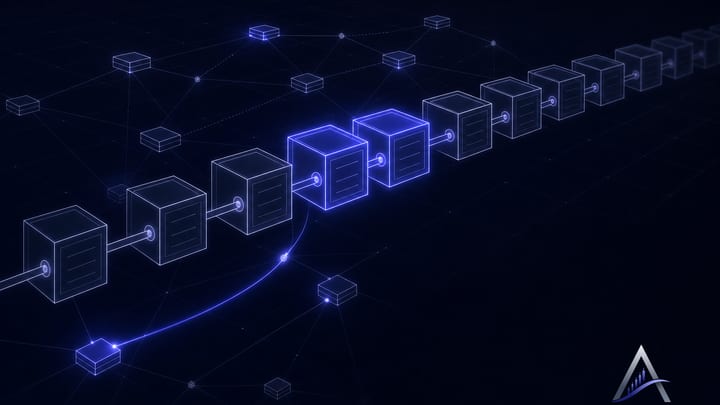
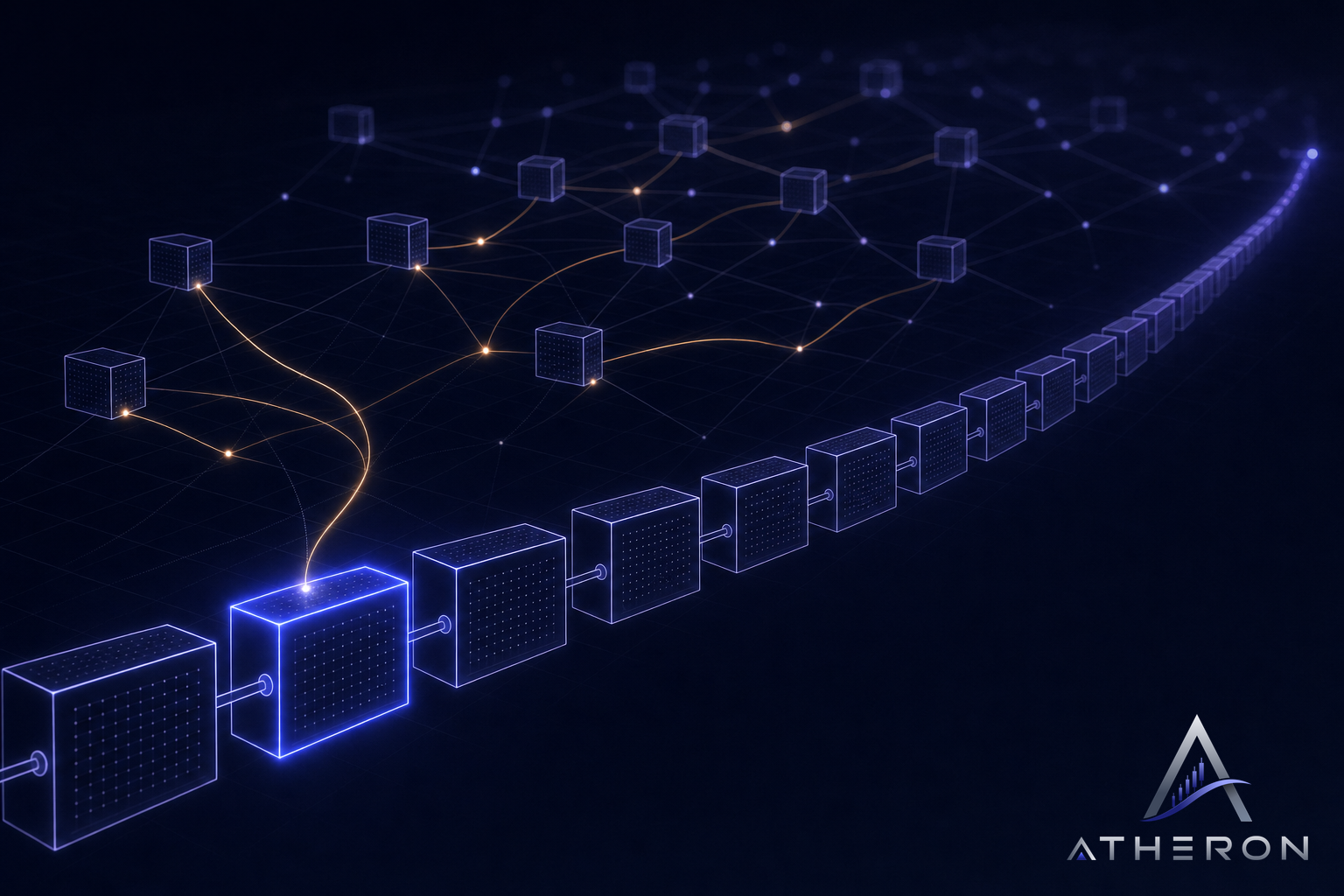
- Many blocks at once. Miners can produce blocks at the same time. A GHOSTDAG-style rule then puts all of them into one agreed order, so parallel work is kept rather than thrown away.
- A fixed supply. There is a hard cap of one billion ATON.
- A long emission. Coins are paid to miners over a long period that slows into a small tail. The exact curve is not specified yet.
- A fair launch. There will be no premine and no sale. The one planned exception is the team allocation, covered below.
Mining sits underneath all of this. It is how blocks are made, and it is how coins reach people. So who can mine matters.
Proof of work, briefly
In proof of work, a miner has to show that it spent real effort before its block is accepted. The effort is a puzzle that is costly to solve and cheap for everyone else to check. That cost is what makes rewriting the record expensive.
The question is what kind of effort the puzzle demands. That choice decides which machines are good at it.
Memory-hard, in plain words
Some puzzles only ask for raw arithmetic, done again and again. Chips built for one such puzzle can do that far faster and cheaper than general hardware.
A memory-hard puzzle is different. To solve it, a miner must keep a large amount of data in memory and keep reading from it and writing to it, jumping between places that are hard to predict. The speed limit is no longer just how fast a chip can calculate. It is how much memory it has and how quickly it can move data in and out.
Graphics cards are built for exactly that. They carry a lot of fast memory, because drawing images needs it. So an ordinary card, the kind sold for games and design work, is a natural fit for this kind of puzzle.
ATON uses one memory-hard proof of work. One algorithm, one set of rules, the same for every miner.
Why this suits a payments chain
We want the people who secure the chain and receive new coins to be a wide group, not a small one. Tying mining to hardware that many people already own, or can buy in an ordinary shop, helps with that.
It also fits the fair launch. With no premine and no sale, mining is the main way coins come into existence. If that mining favoured a narrow class of specialised machines, the fair launch would be fair only on paper. Pairing it with graphics card mining keeps the route open to more people.
What memory-hardness does not promise
We would rather state the limits plainly.
- It narrows the gap, it does not close it. Memory-hard work reduces the advantage of specialised chips, because memory is harder to shortcut than arithmetic. It does not make specialised hardware impossible.
- Mining has real costs. A graphics card uses electricity and wears over time. Whether mining makes sense for you depends on your own costs and circumstances.
- Nothing is running yet. The chain has not launched. There is no mining today, and there are no coins today.
- We make no claims about value. We do not say what ATON is or predicted value, and nothing here is financial advice. The site takes no orders and sells nothing.
The short version
ATON is a payments chain that orders many blocks at once into one shared history, with a hard cap of one billion coins paid out to miners over a long emission. It is mined with one memory-hard proof of work. That kind of work leans on memory, and ordinary graphics cards have plenty of it.
The aim is simple: keep the way in open, so the chain is secured and its coins are earned by a wide group of people. You can follow the build on the ATON Blockchain site.