A launch is only fair if you can check it. The word "fair" costs nothing to say. So this piece is less about what we promise and more about how you can hold us to it.
What the chain is
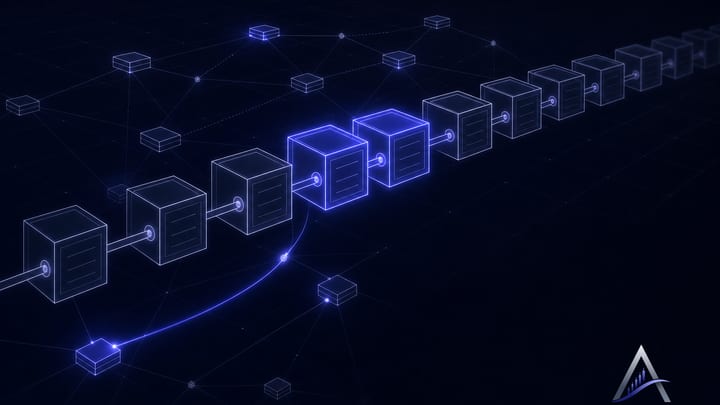
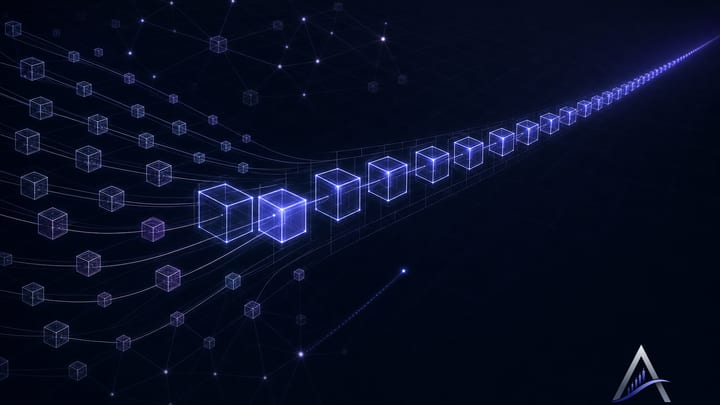
ATON is a public blockchain for payments, and it is still being built. Its coin is also called ATON. You mine it with an ordinary graphics card, using one memory-hard proof of work. Blocks can be made at the same time, and a GHOSTDAG-style rule puts them into one agreed order.
The supply has a hard cap of one billion ATON. Coins reach miners through a long emission that slows into a small tail. Nothing has launched yet.
What is already fixed
Some parts of the plan are settled, and they are the parts you can test most easily.
- No premine. Apart from the one planned exception below, no coins exist before the first block is mined.
- No sale. There is no sale of coins, before launch or at it.
- Nothing sold on the site. The site takes no orders and makes no offers.
- A hard cap. One billion ATON, and no more.
If any of these ever changed, that would be a different launch, and you should treat it that way.
What is still open
Two things are not decided, and we would rather say so than guess.
The first is the team allocation. It is the one planned exception to the fair launch. Its size is not decided. How it vests, meaning how and when the team can actually use those coins, is not decided either. Both will be published before the first block.
The second is the emission curve. We know its broad shape, long and slowing into a small tail, but the exact curve is not specified yet.
How to read the team allocation when it lands
When we publish the allocation and its vesting, look at a few things. These are the questions we would ask of any project.
- How big is it, compared with the cap? A share of one billion is easy to work out. Do the sum yourself.
- When can it move? Vesting tells you how quickly the team's coins can be used. A share that unlocks all at once is different from one released over time.
- Was it published before the first block? That is the commitment. An allocation announced after mining starts would break it.
- Is it the only exception? The plan has one exception. If you see a second one, ask why.
None of these questions needs trust. They need the published figures and a little arithmetic.
Why the order matters
Publishing before the first block is the point. Once mining starts, coins exist and the rules are in motion. Changing the terms after that is unfair to everyone who joined on the old terms.
Setting the terms out first means anyone deciding whether to mine can see the full picture, team share included, before they spend a single hour of graphics card time. And because ATON is mined with an ordinary graphics card, taking part does not depend on owning special machines.
What we will not do
We will not tell you what ATON is or the predicted value. We give no financial advice. A fair launch is about how coins come into existence, not about price.
Where to follow along
The plan is posted on the ATON site as decisions are made. When the team allocation and its vesting are ready, that is where you will find them, before the first block, as promised.